

Faced with New York’s hectic fall exhibition calendar and “blockbuster” shows around postwar American abstract painters, gallery-goers can enjoy quiet immersion in the visual poetics of Herman Cherry in two conjunctive exhibitions: How the River Flows, happening at Shamnoski Gallery on the Upper East Side through October 10 and Rivers From 30000 Feet, showing at Sebastian Gladstone Gallery in Tribeca until October 24.
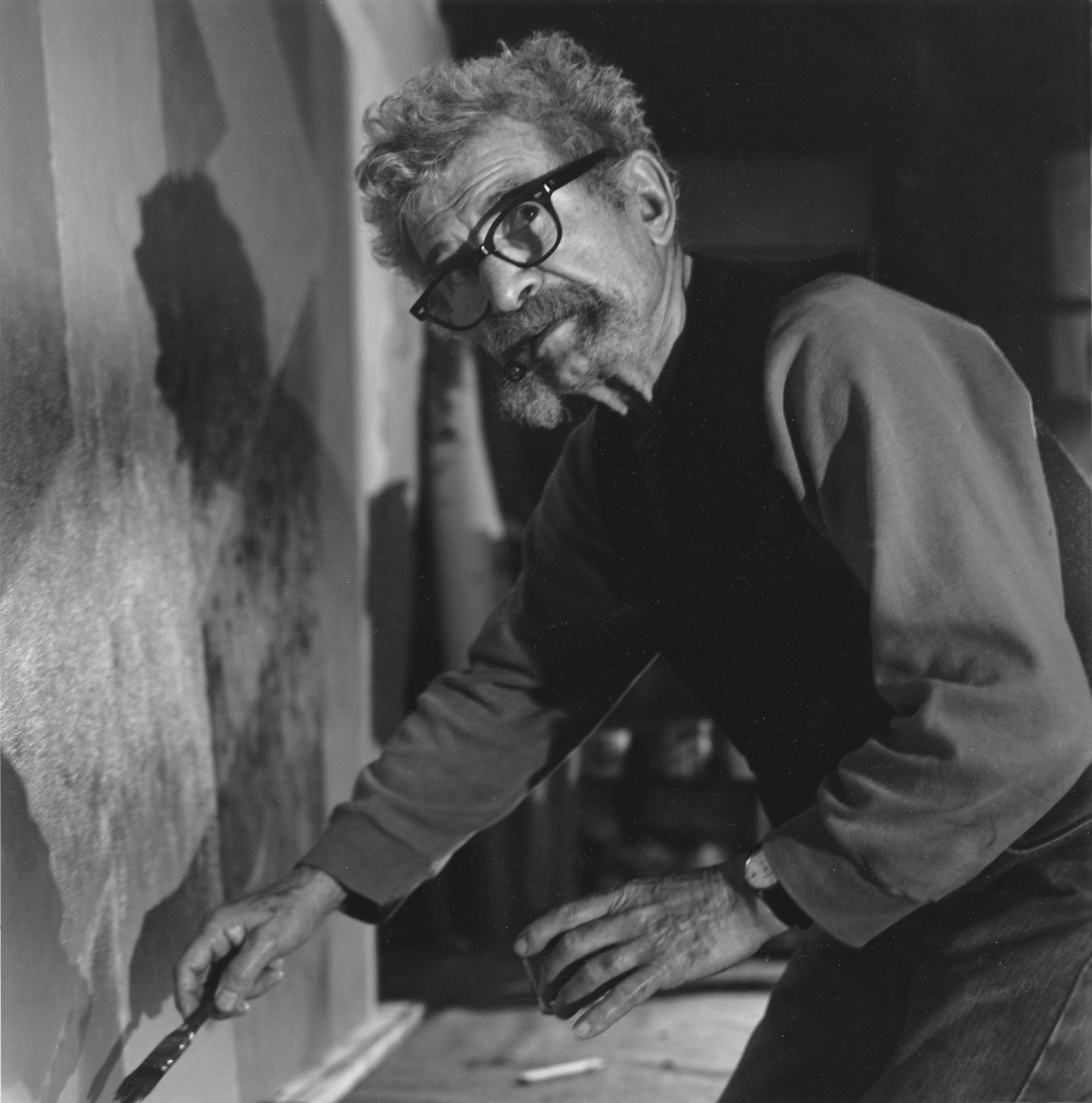
Both exhibitions focus on his transitional stage at the dawn of the 1970s. Through mixed-media studies on paper and vibrant large canvases, the shows capture a little-known creative chapter in a career that spanned seven decades.
In 1970, after more than a decade traveling out west to university teaching stints, Cherry found a new home studio in East Hampton, New York. Still he lacked gallery representation even as he remained in high regard by discerning art critics and fellow veterans of the Abstract Expressionist-era who had long viewed Cherry as a master at integrating prismatic color into dense planar compositions.
That period of relative obscurity may have liberated him, as these dual exhibitions reveal the artist moving into a limpid, Zen-like abstraction — a kind of opulent minimalism.
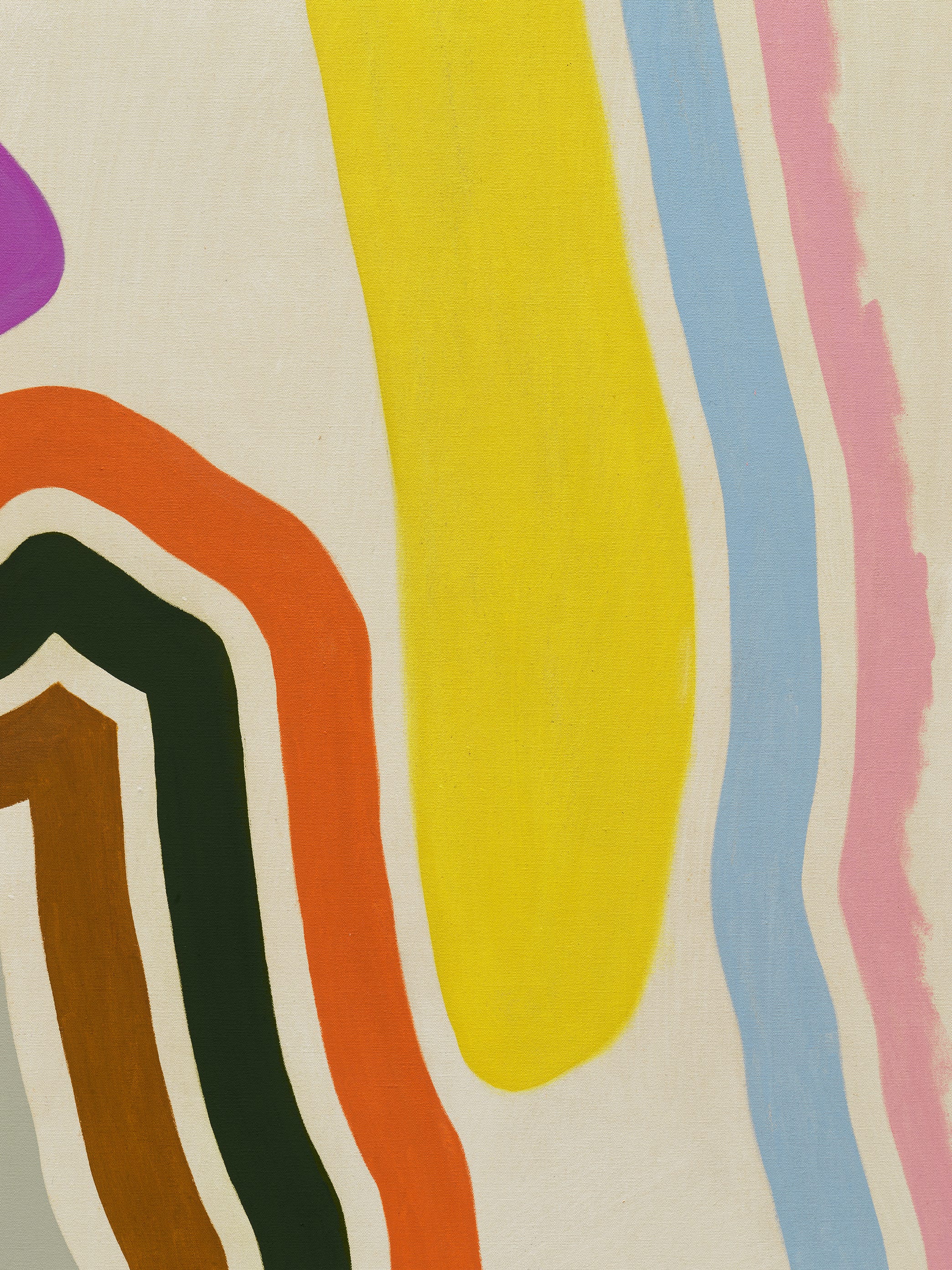
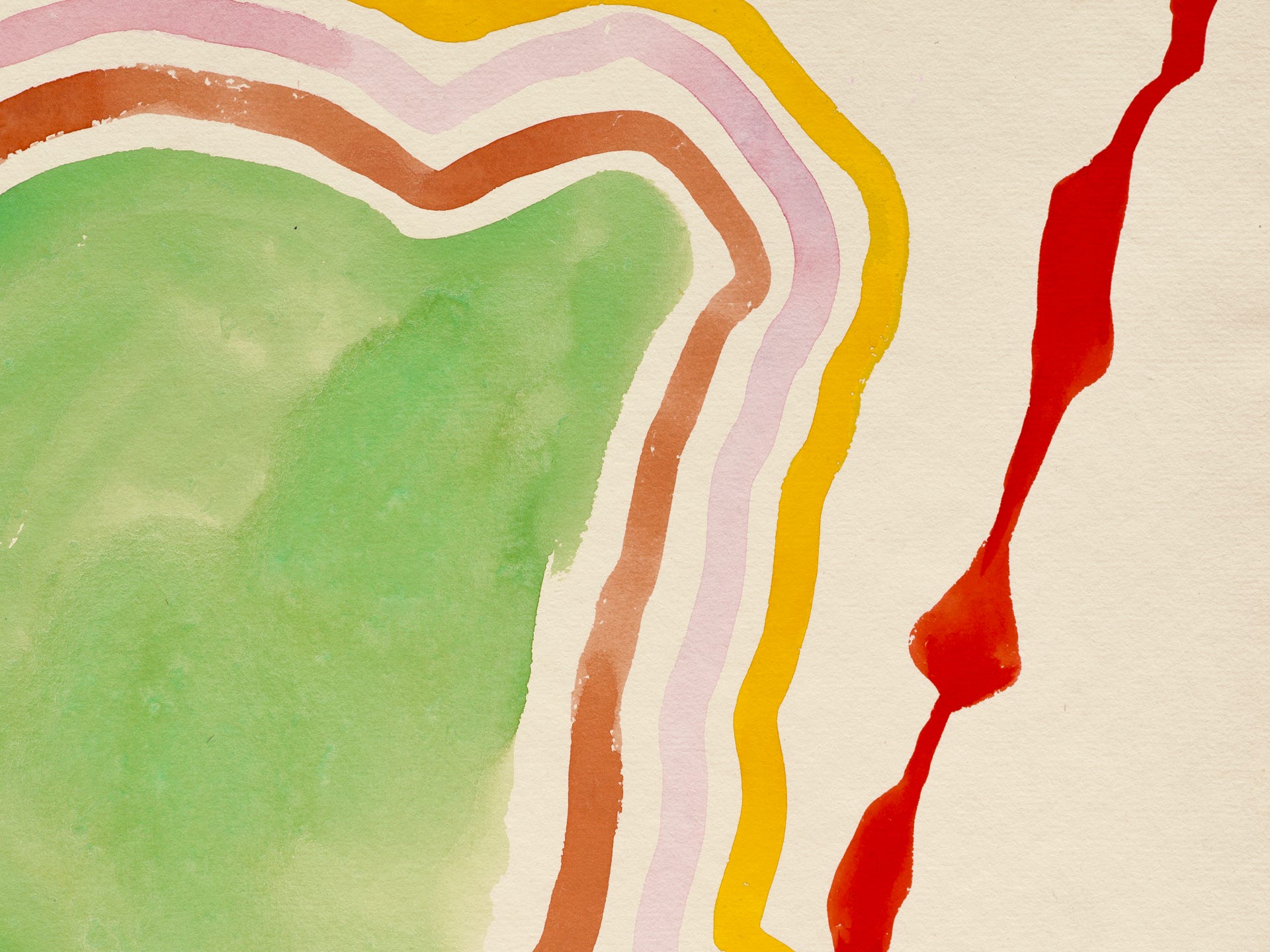
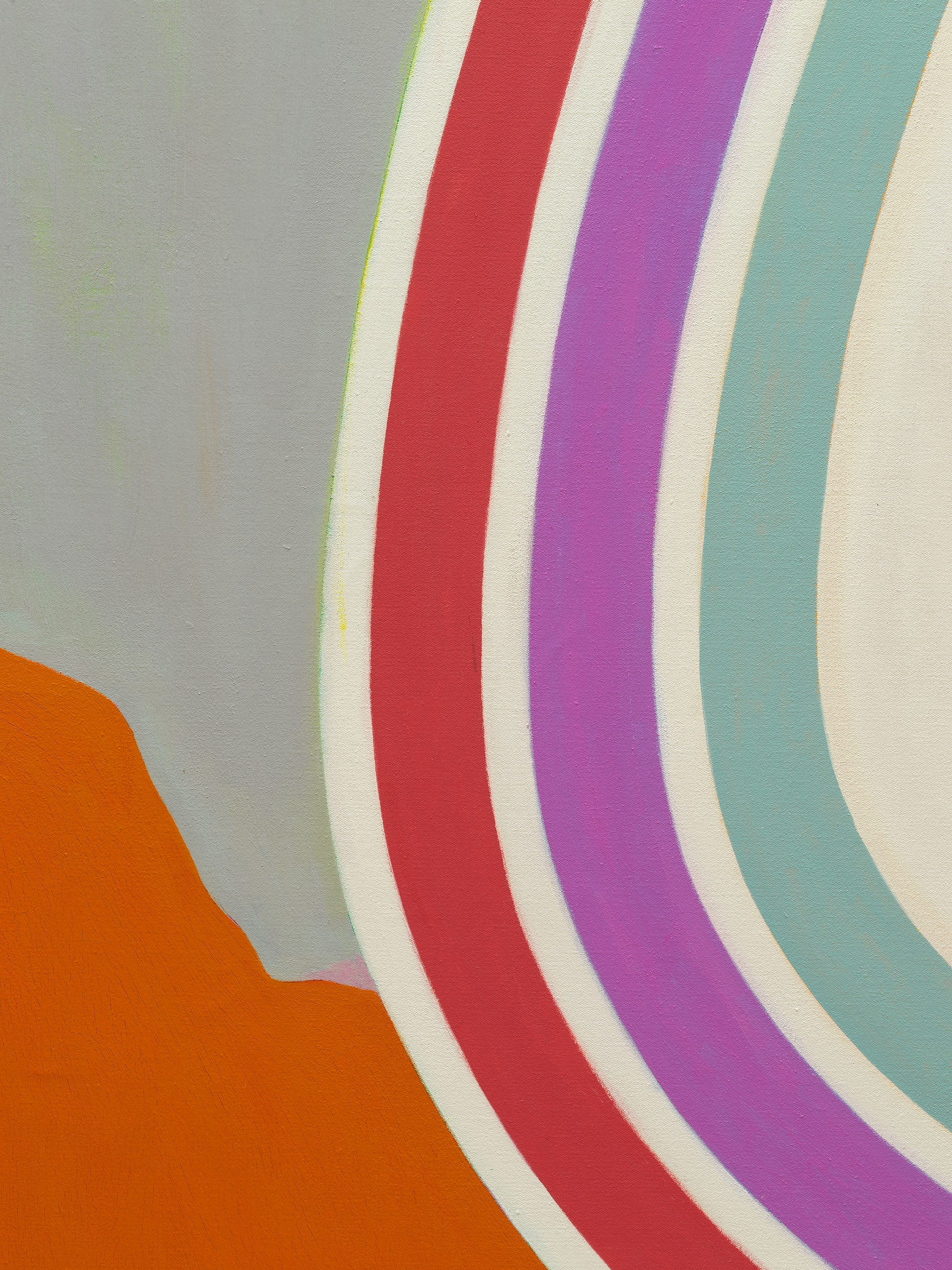
These open compositions involve fastidious gestural brushwork: long stripes, curls, spirals, and floating, protoplasmic shapes. Ample negative spaces augment their luminosity. Bold pinks, bright yellows and crisp reds and browns vie with their supple ribboned and ovaline forms for a predominant role in defining visual experience without either element eclipsing the other.
Each connotes an aerial view or suggests an unearthed geological map. Their serial nature lends drama to the two interrelated exhibitions. Paintings reiterate color-schemes and patterned lines from adjacent works and smaller works are presented as triptychs.
Individually and collectively, they conjure imaginative wanderlust. In some works, like The River Series, sinuous, parallel bars — sky blue and raw pink — hug monochromatic yellow forms that look like islets or shoals, mapping allegorical archipelagos. The illusion of movement is sustained and palpable, a flowing-and-floating sensation reminding us — as often abstraction does — that space is the most primary, defining facet of experience.
Given their topographical titles and abrupt in media res narratives, it is as if the paintings are channeling — in a tranquil mood — the chromatic-musical synaesthesia in the French poet Arthur Rimbaud’s “Le Bateau ivre” (1871).
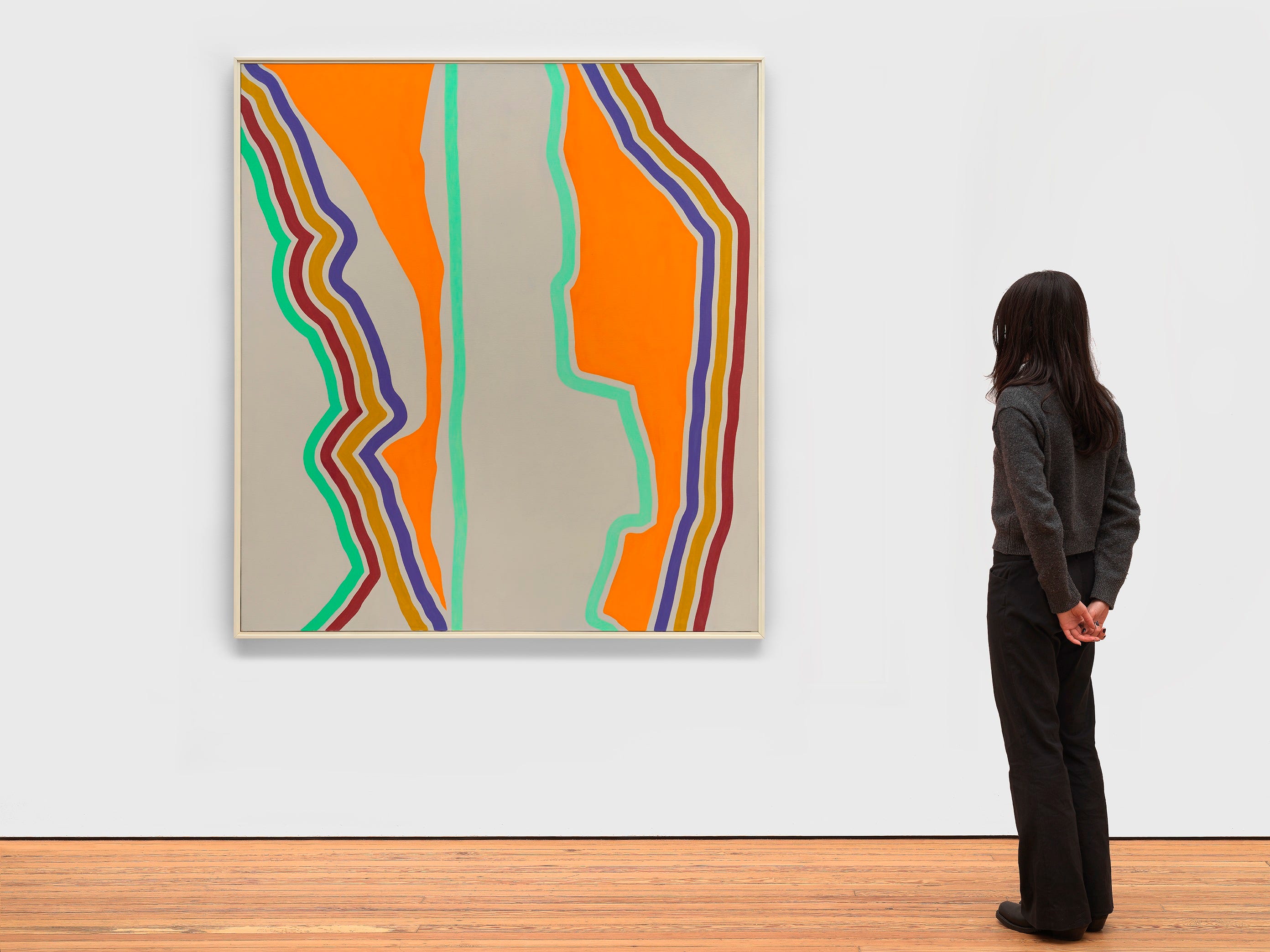
Like water-borne imagery in that famous poem, in the Summer series, Cherry’s rivulets in cerulean blue, autumnal yellow and earthen red glide along bright orange peninsulas, as if moving — per Rimbaud — “Downstream on impassive rivers suddenly.”
Meandering, aqueous routes, banded reds, greens, blues, or yellows, reverberate as if against one another, producing the kind of extrasensory effect that Rimbaud describes as, “The circulation of unheard saps, / And the yellow-blue alarum of phosphors singing.” 1
Tidal diction fits Cherry’s creative biography, too. Born in Atlantic City, New Jersey in 1909 to Ukrainian immigrant parents, in his formative artistic years he drifted between Los Angeles and New York, studying at the Art Students League in both cities while scratching out a living through odd jobs, including driving a cab and working in an L.A. bookstore that hosted his friend Philip Guston’s first solo exhibition.
As he found solidarity with Guston, as well as artists Fletcher Martin and Reuben Kadish, Cherry’s painting seems to have been deploying high-key color early on, even when many American peers in abstraction — especially in New York — were slowly casting off browns and grays of the once-dominant Ashcan and Social Realist schools.
As pointed out in a wall chart at Sebastian Gladstone, this interest in color and light was shaped by time on the West Coast — with forays in Mexico, too — and by L.A. mentor Stanton Macdonald Wright, one of America’s earliest adopters of European abstract painting.
Working from Paris in the 1910s, Macdonald, along with Morgan Russell, had formalized “Synchromy,” which the latter defines as a painterly abstraction in which “color and light must be melted into one” so that “light [can] be expressed as it is felt by color.” 2
Put another way, Synchromy posits that twelve colors in a color wheel ought to be handled by a painter in a manner analogous to how a composer arranges twelve tones in an octave. Both systems, in this view are chromatic scales. Painting produces meaning, as it were, symphonically, through pure chromatic rhythm.
While these two exhibitions show he adopted Macdonald Wright’s ideas about color, over many years, Cherry adjusted his approach according to an internal metronome.
He injected color into early, darker toned paintings subtended by Cubist, planar and geometric arrangements. And in the AbEx boom era — when Cherry showed at New York’s Stable, Kootz and Poindexter galleries — friends like Franz Kline and Willem de Kooning sought an epic reach in their abstractions, while Cherry opted for large-scale but intimate lyricism.
Informed by mid-career travels in Europe and South America, his abstractions are built on chromatic gradations and contrasting hues while working in painterly punctuation — pauses and gaps in imagery that allow light to absorb and reflect the colors — somewhat akin to the aesthetic that propelled his prolific friend Joan Mitchell.
There’s a levity to Cherry’s seriousness. By the mid-1960s, he adopted a deliberately buoyant tenor — perhaps modeled on the mood in late-period Matisse. These abstractions were built around color fields animated by large globs and curvilinear entities that levitate or glide and make tentative contact. They could be precursors to the circumfluous and melodic paintings currently on view.
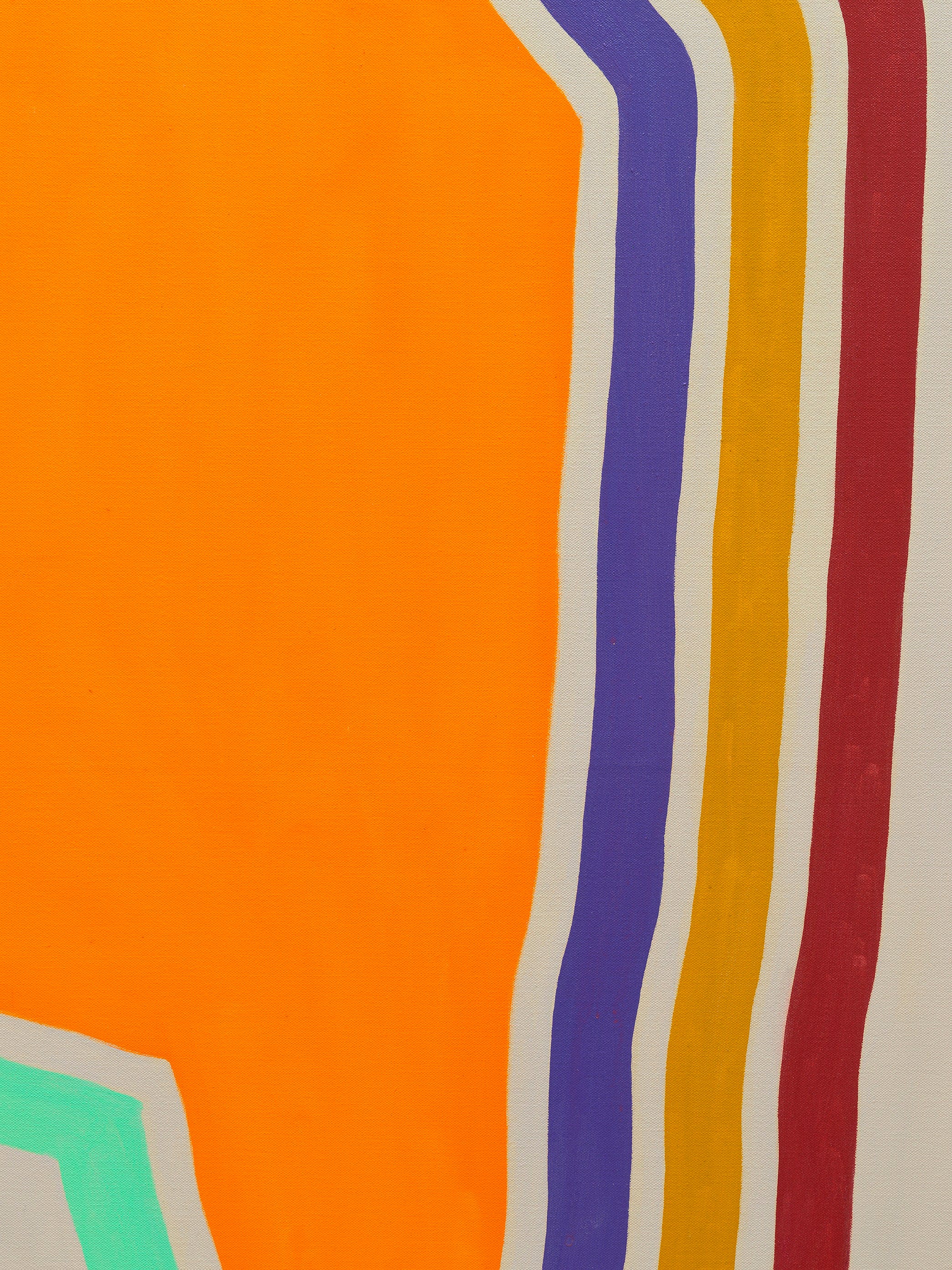
Maybe inspired by the way landscape looks when viewed from a descending airplane, or how curved trails and bodies of water are mapped in a color-coded legend on a kayaker’s map, Cherry translates such layouts into rhythmic visual music built upon abstract colors.
Poetry and music are generative analogs. When health challenges slowed him, Cherry temporarily suspended painting, telling friends that he had given up painting in favor of writing poetry — adding, wryly, “I had to make a living.”
Cherry’s poetry lurks in the paint. The patterned color and varied directions in works like Summer Series (1970) have a corollary in how meaning unfolds kaleidoscopically — from one stanza to another — in serial lyric poems by figures like Robert Frost or Wallace Stevens.
Music is conjured here and there in both exhibitions. The chromatic bands and recurrent wending might be analogous to tonal repetitions and shifts — sonic movements — in a suite by Franz Liszt or Steve Reich.
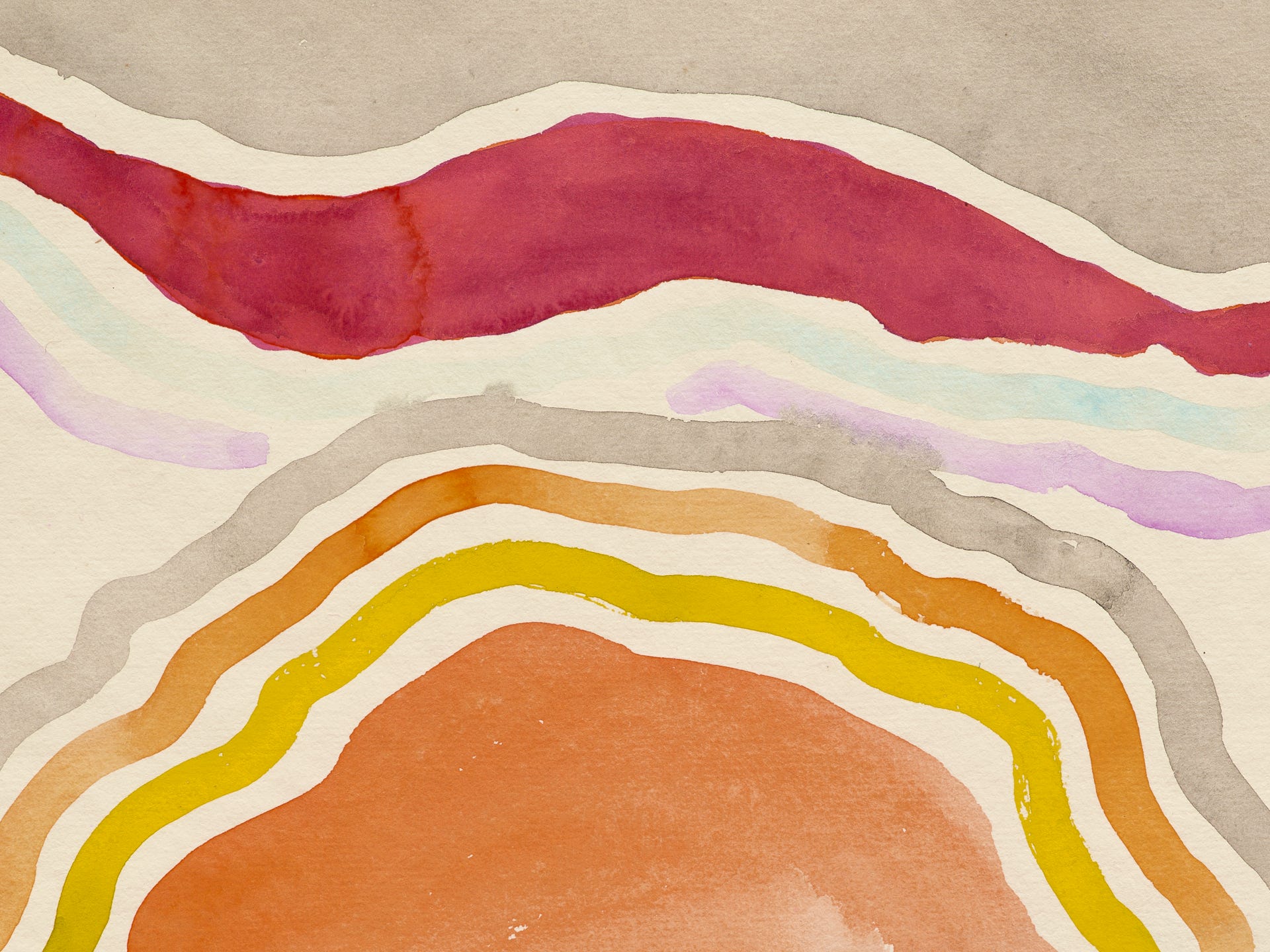
Spending unhurried time at Shamnoski and Sebastian Gladstone may seem like coming upon a slow waltz being performed through brushwork. Created in far eastern Long Island, with its pink-yellow and blood-red sunrises and sunsets over pale orange dunes and seagrass-lined creeks and ponds, Cherry’s art from this period is generous, spacious and authentically optimistic. The works invite the viewer into their metaphorical dances, to be moved by and through measured, syncopated cadences.
Arthur Rimbaud “Drunken Boat” [translated] in Samuel Beckett. Collected Poems in English and French by Samuel Beckett. Grove Press, 2007.
Morgan Russell, as quoted in Richard H. Love. Carl W. Peters: American Scene Painter from Rochester to Rockport. University of Rochester Press, 1999